
About Us
Why PCGL Matters
Canada has developed a rich ecosystem of genomic research projects and platforms, generating an enormous amount of valuable genomic data. This data enables researchers to identify genetic differences, better understand rare and complex diseases such as cancer, and develop more effective treatments. But much of this data is hard to share or reuse. As a result, research progress is slowed, and Canada has not yet realized the full potential of this important national resource.
That’s why the Pan‑Canadian Genome Library (PCGL) was created.
In 2023, the Canadian Institutes of Health Research (CIHR) launched PCGL to give Canada a single, coordinated way to collect and access genomic data.
What is PCGL?
The Pan‑Canadian Genome Library (PCGL) is a national Canadian initiative that brings together human genomic and health data from research studies into a trusted data repository. Acting as a secure library, PCGL safeguards genomic data and enables its responsible sharing, empowering researchers with the high‑quality information they need to drive discovery.
From Data Submission to Discovery
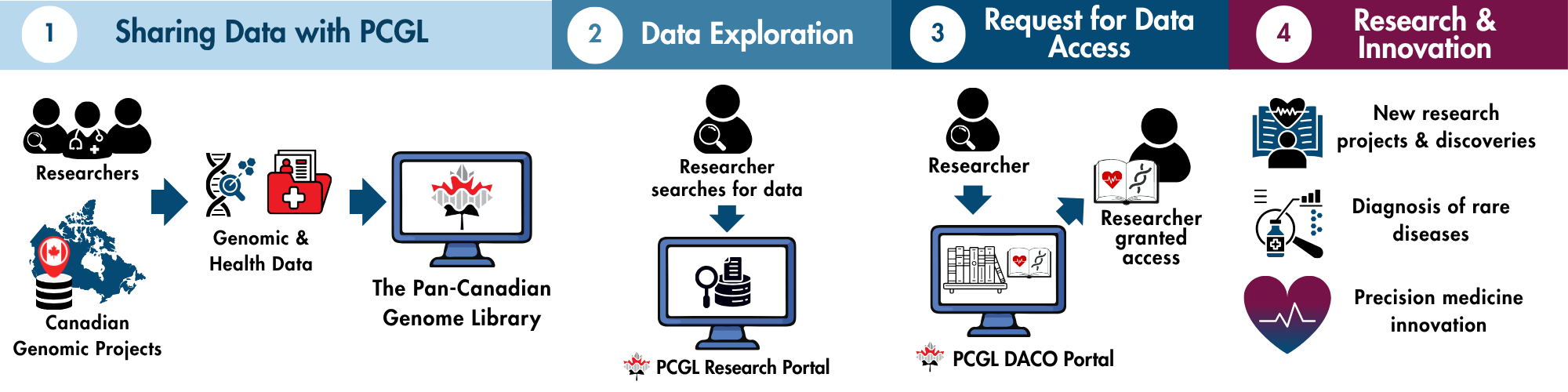
Explore a brief overview of a PCGL user’s journey, from submitting genomic data to searching for it, applying for access, and using it to drive new discoveries and innovations in health.
Data Submission to PCGL
Researchers and Canadian genomic data initiatives can securely submit their genomic and associated health data to PCGL. Our infrastructure ensures long‑term, trusted archiving and protection of all contributed datasets.
Data Exploration
Through the PCGL Research Portal, researchers can explore a wide range of genomic datasets relevant to their work. Our powerful search tools make it easy to identify datasets that support new scientific questions.
Request for Access
When researchers identify datasets they wish to use, they can submit a formal request through PCGL’s Data Access Compliance Office (DACO) Portal. Each request is reviewed by our application review committee to ensure appropriate and ethical use. Once approved, researchers receive secure access to the data they applied for.
Research and Innovation
With access to high‑quality genomic datasets, researchers can unlock new research, drive discoveries and diagnoses, as well as accelerate precision medicine innovation.
Our Goals
Through uniting Canada’s genomic data into one trusted place, the PCGL aims to:
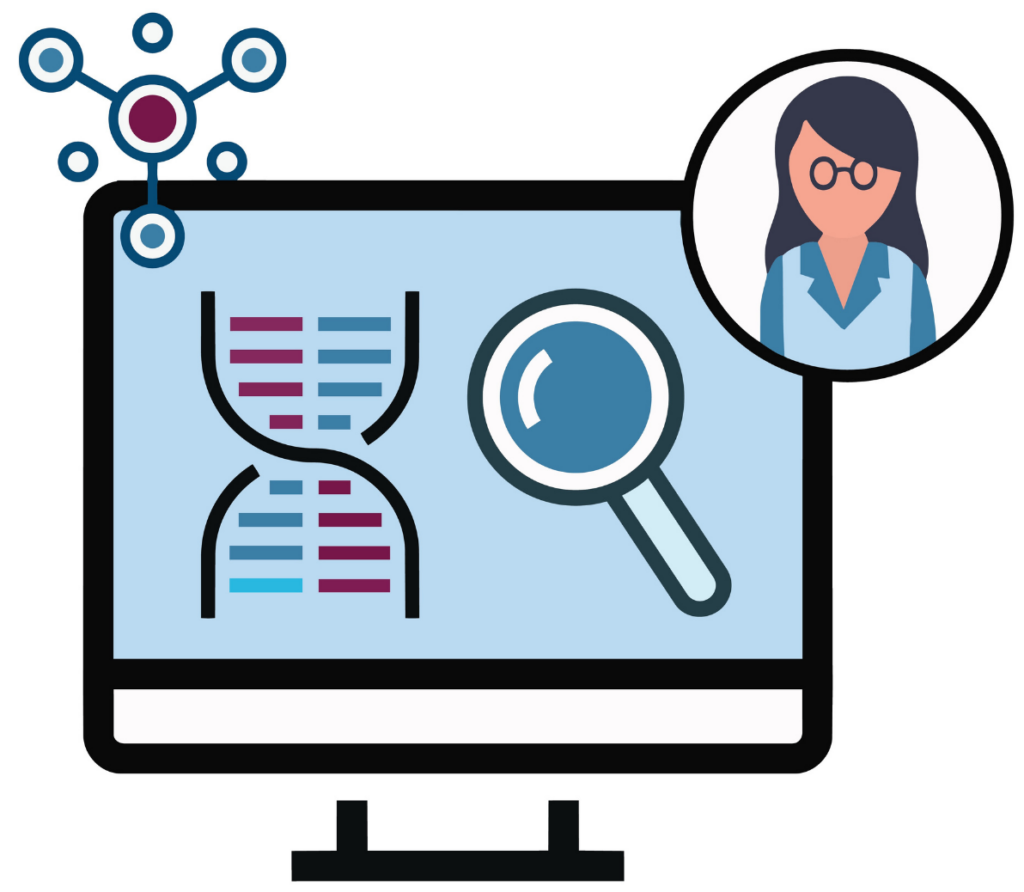

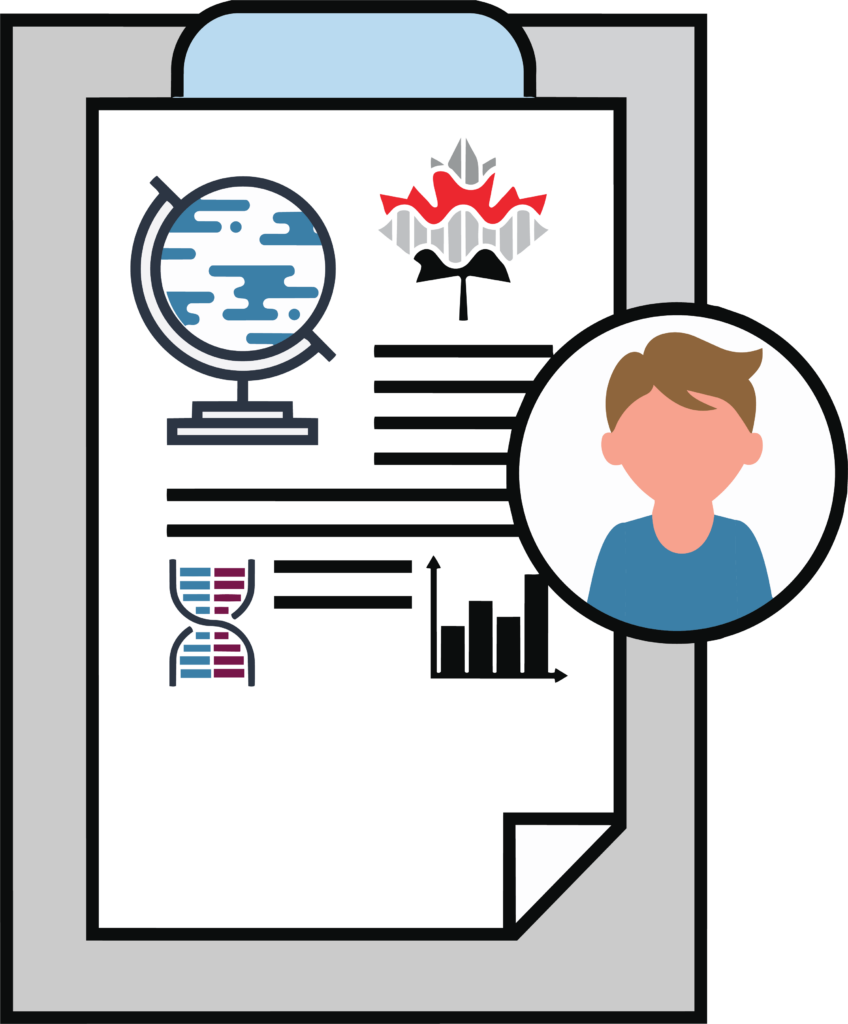


Facilitate access to and analysis of Canadian genomic data to accelerate research and innovation nationwide
Advance equity, diversity and inclusion in genomic research by capturing the Canadian variome, i.e. the full range of genetic variation within a population
Strengthen the effectiveness of healthcare delivery by supporting data-driven insights that improve diagnosis, treatment, and patient outcomes
To provide means and opportunities to facilitate clinical trials for all Canadians
Advance Indigenous leadership and sovereign‑based governance models across PCGL and the broader genomic research ecosystem.
Our Team
Led out of McGill University, our team brings together experts from seven Canadian provinces, including patient partners, early career researchers, and individuals with established relationships with Indigenous and other equity-deserving communities.
We collaborate through six working groups designed for cross-representation, complemented by the Indigenous Genetics Circle (IGC), Patient Partnership Team (PPT), the International Advisory Board (IAB), and the Knowledge Users Committee (KUC).